
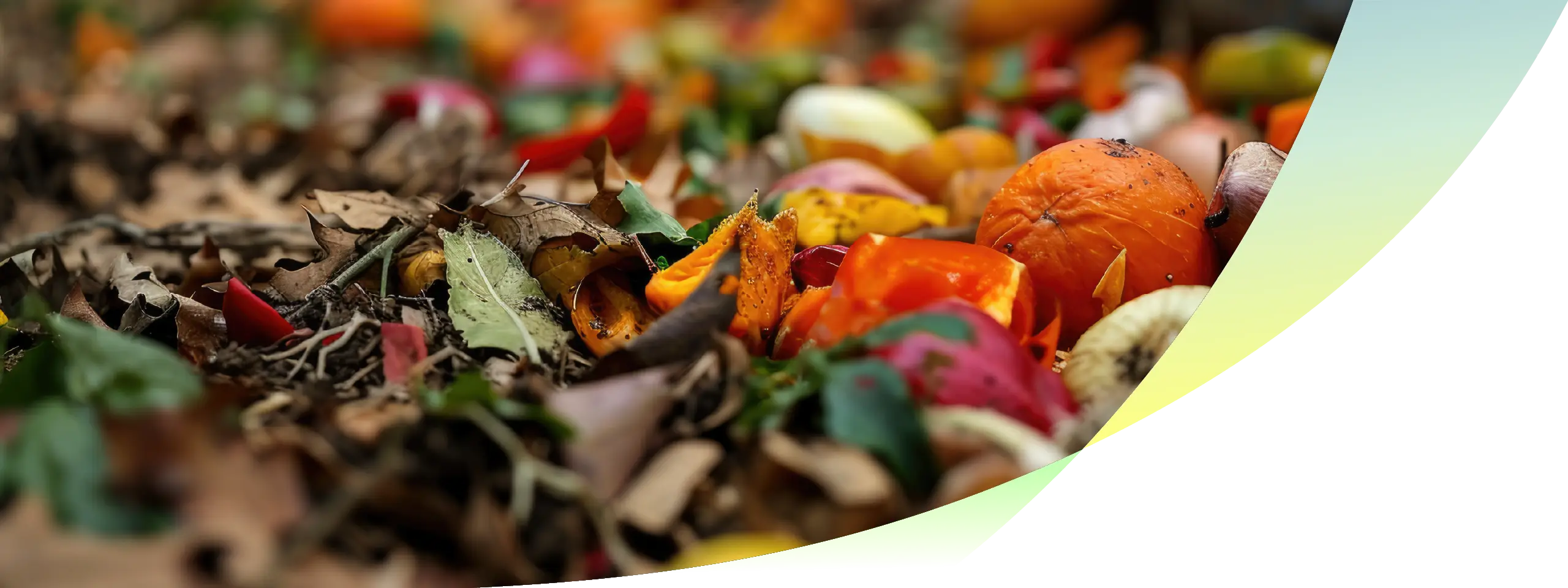
Organics Recycling
Organic waste is one of the largest contributors to landfill across business operations. Food scraps, expired products and biodegradable materials are generated daily, and without the right systems in place, much of this waste is disposed of incorrectly.
Organics recycling provides a structured way to divert these materials away from landfill and into processes such as composting or energy recovery. When managed effectively, it reduces environmental impact while improving operational efficiency.
WasteFlex delivers commercial organics recycling programs across multiple sites, helping businesses simplify separation, maintain hygiene standards and achieve consistent organics waste collection outcomes.
What Is Considered Organic Waste?
Organics recycling is the process of collecting and recovering food waste, garden organics and other biodegradable materials so they can be converted into compost, soil conditioners and other beneficial products instead of being sent to landfill.
Common examples include:
- Food scraps and preparation waste
- Expired or damaged food products
- Plate waste from kitchens and dining areas
- Coffee grounds and organic residues
- Green waste such as landscaping materials
Food waste recycling is particularly important in industries where organic materials are generated in high volumes and require frequent handling.
What Is FOGO and What Does the NSW FOGO Mandate Mean for Businesses?
FOGO stands for Food Organics and Garden Organics and involves separating organic material from general waste so it can be collected and recovered through an appropriate processing pathway.
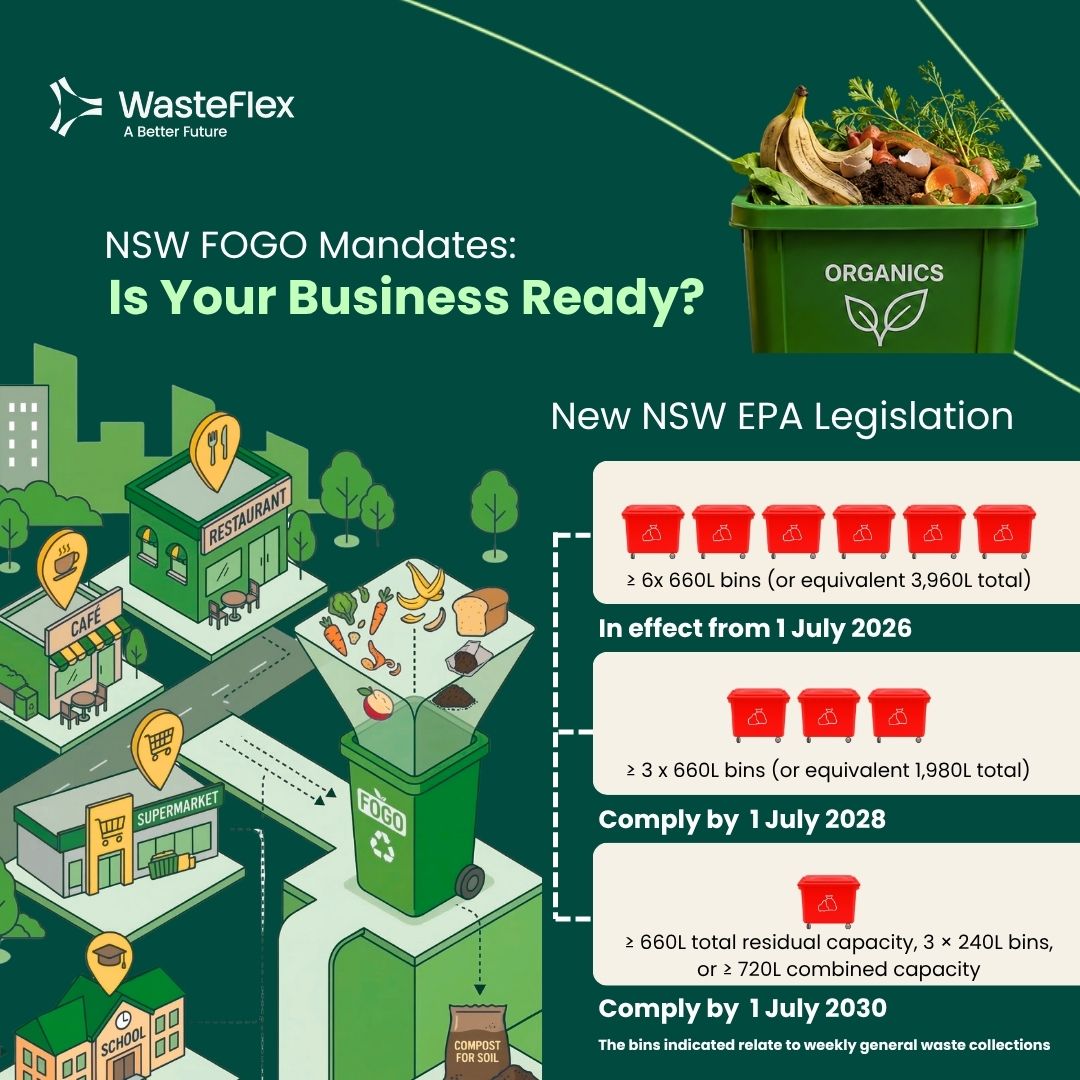
Under the NSW FOGO mandate, relevant businesses and institutions are progressively being required to separate food organics from general waste. For businesses, the requirement focuses on source-separated food organics, which means garden organics do not necessarily need to be collected in the same waste stream.
For businesses covered by the mandate, this means having sufficient food-organics collection capacity, arranging collection at least once per week and ensuring food organics are transported separately from non-organic waste.
WasteFlex can help businesses review their existing waste arrangements and coordinate food-organics services around waste volumes, site requirements and existing operations. For organisations with multiple locations, services can also be managed within a broader waste-management program while allowing for site-specific requirements.
What Can Be Recycled Through Organics Recycling?
Organics recycling programs are designed to recover biodegradable materials that would otherwise be sent to landfill. By separating organic waste from general waste, businesses can improve resource recovery outcomes, reduce contamination and support sustainability objectives.
Common materials accepted in organics recycling streams include:
- Food scraps
- Fruit and vegetable waste
- Bread and baked goods
- Coffee grounds
- Tea leaves
- Rice, pasta and noodles
- Garden organics
- Plant material
- Organic food preparation waste
Accepted materials may vary depending on local processing facilities and recycling requirements. Organisations should always follow site-specific guidelines to ensure organics streams remain free from contamination.
Why Organic Waste Requires a Dedicated Approach
Organic materials behave differently from other waste streams. When mixed with general waste or recycling, they create contamination, odour issues and additional handling challenges.
Separating organic waste allows businesses to:
- Reduce landfill disposal volumes and associated costs
- Maintain cleaner and more hygienic environments
- Improve overall waste diversion performance
- Support sustainability and ESG objectives
- Meet regulatory and environmental requirements
A structured organic waste management approach ensures materials are handled safely and consistently.